Buy agave.eu ?
We are moving the project
agave.eu .
Are you interested in purchasing the domain
agave.eu ?
domain@kv-gmbh.de · 0541-91531010
Buy agave.eu ?
How do I calculate refraction or the angle of refraction?
To calculate refraction or the angle of refraction, you can use Snell's Law, which relates the angles of incidence and refraction to the refractive indices of the two mediums involved. The formula is n1*sin(theta1) = n2*sin(theta2), where n1 and n2 are the refractive indices of the two mediums, and theta1 and theta2 are the angles of incidence and refraction, respectively. By rearranging this formula, you can solve for the angle of refraction when given the angle of incidence and refractive indices of the mediums. **
How do I calculate the refraction or the angle of refraction?
To calculate the angle of refraction, you can use Snell's Law, which states that the ratio of the sine of the angle of incidence to the sine of the angle of refraction is equal to the ratio of the velocities of light in the two different mediums. Mathematically, this can be expressed as n1*sin(theta1) = n2*sin(theta2), where n1 and n2 are the refractive indices of the two mediums, and theta1 and theta2 are the angles of incidence and refraction, respectively. By rearranging this equation, you can solve for the angle of refraction. **

Similar search terms for Refraction
Top-Angebote
Products related to Refraction:
-
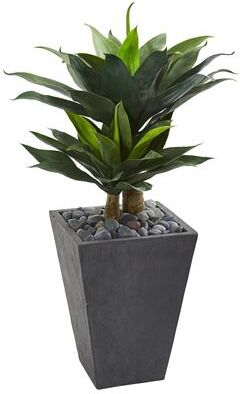
Nearly Natural "37"" Double Agave Succulent Artificial Plant in Slate Planter"Welcome a relaxed vibe with this artificial double agave succulent. Showcasing realistic looking leaves in natural coloration stemming from two sturdy trunks, it projects southwestern flair.141,46 $*Shipping: 0,00 $Secure redirect to the provider

-
What is the angle of refraction in the refraction of light?
The angle of refraction in the refraction of light is the angle between the refracted ray and the normal to the surface at the point of incidence. It is determined by Snell's Law, which states that the ratio of the sine of the angle of incidence to the sine of the angle of refraction is equal to the ratio of the velocities of light in the two media. The angle of refraction can be calculated using the formula: n1*sin(θ1) = n2*sin(θ2), where n1 and n2 are the refractive indices of the two media, and θ1 and θ2 are the angles of incidence and refraction, respectively. **
-
Which option is better: agave syrup or maple syrup?
The choice between agave syrup and maple syrup ultimately depends on personal preference and dietary needs. Agave syrup has a lower glycemic index, making it a better option for individuals monitoring their blood sugar levels. On the other hand, maple syrup contains more antioxidants and minerals, such as manganese and zinc. Both syrups can be used as natural sweeteners, so it is important to consider your health goals and taste preferences when choosing between the two. **
-
What is refraction in a prism?
Refraction in a prism is the bending of light as it passes through the prism due to the change in speed of light in different mediums. When light enters a prism, it slows down and bends towards the normal line, then as it exits the prism, it speeds up and bends away from the normal line. This bending of light causes the different colors of the spectrum to separate and create a rainbow effect. **
-
What is the law of refraction?
The law of refraction, also known as Snell's law, describes the relationship between the angles of incidence and refraction when a wave, such as light or sound, passes from one medium to another. It states that the ratio of the sine of the angle of incidence to the sine of the angle of refraction is equal to the ratio of the velocities of the wave in the two media. In other words, the law of refraction quantifies how much a wave bends as it passes from one medium to another, such as from air to water or from air to glass. **


Does agave syrup taste better than honey?
The taste preference between agave syrup and honey is subjective and varies from person to person. Agave syrup is known for its mild, neutral flavor, while honey has a distinct sweet and floral taste. Some people may prefer the subtle sweetness of agave syrup, while others may enjoy the rich flavor of honey. Ultimately, the choice between the two comes down to personal preference and the specific dish or drink being prepared. **
Should agave syrup or syrup in general be diluted and colored?
Agave syrup or any syrup in general should not be diluted and colored. Diluting the syrup would alter its flavor and sweetness, while adding artificial colors would compromise its natural appeal. It is important to maintain the purity and natural qualities of agave syrup or any syrup to ensure that consumers are getting a high-quality product. Any dilution or coloring would detract from the authenticity and health benefits of the syrup. **
Top-Angebote
Products related to Refraction:
-
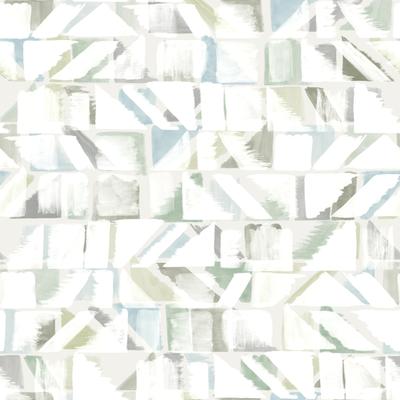
York Wallcoverings Blue Refraction Peel and Stick WallpaperPattern Refraction is a fractured geometric with the effect of a broken prism of reflected light. This Refraction Peel & Stick Wallpaper measures approximately 20.5 inches wide by 20 feet long, covering About 34.2 square feet per roll.47,07 $*Shipping: 0,00 $Secure redirect to the provider
-
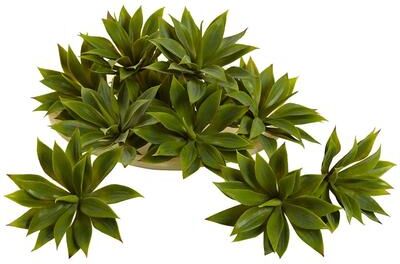
Nearly Natural "29"" Double Agave Succulent Artificial Plant"Make your space green and full of life with this realistic-looking artificial succulent. Green leaves give the plant a lush, healthy look, while the plain black planter is simple and easy to match.84,52 $*Shipping: 0,00 $Secure redirect to the provider
-
How do I calculate refraction or the angle of refraction?
To calculate refraction or the angle of refraction, you can use Snell's Law, which relates the angles of incidence and refraction to the refractive indices of the two mediums involved. The formula is n1*sin(theta1) = n2*sin(theta2), where n1 and n2 are the refractive indices of the two mediums, and theta1 and theta2 are the angles of incidence and refraction, respectively. By rearranging this formula, you can solve for the angle of refraction when given the angle of incidence and refractive indices of the mediums. **
-
How do I calculate the refraction or the angle of refraction?
To calculate the angle of refraction, you can use Snell's Law, which states that the ratio of the sine of the angle of incidence to the sine of the angle of refraction is equal to the ratio of the velocities of light in the two different mediums. Mathematically, this can be expressed as n1*sin(theta1) = n2*sin(theta2), where n1 and n2 are the refractive indices of the two mediums, and theta1 and theta2 are the angles of incidence and refraction, respectively. By rearranging this equation, you can solve for the angle of refraction. **
-
What is the angle of refraction in the refraction of light?
The angle of refraction in the refraction of light is the angle between the refracted ray and the normal to the surface at the point of incidence. It is determined by Snell's Law, which states that the ratio of the sine of the angle of incidence to the sine of the angle of refraction is equal to the ratio of the velocities of light in the two media. The angle of refraction can be calculated using the formula: n1*sin(θ1) = n2*sin(θ2), where n1 and n2 are the refractive indices of the two media, and θ1 and θ2 are the angles of incidence and refraction, respectively. **
-
Which option is better: agave syrup or maple syrup?
The choice between agave syrup and maple syrup ultimately depends on personal preference and dietary needs. Agave syrup has a lower glycemic index, making it a better option for individuals monitoring their blood sugar levels. On the other hand, maple syrup contains more antioxidants and minerals, such as manganese and zinc. Both syrups can be used as natural sweeteners, so it is important to consider your health goals and taste preferences when choosing between the two. **
Similar search terms for Refraction
-
Nearly Natural "37"" Double Agave Succulent Artificial Plant in Slate Planter"Welcome a relaxed vibe with this artificial double agave succulent. Showcasing realistic looking leaves in natural coloration stemming from two sturdy trunks, it projects southwestern flair.141,46 $*Shipping: 0,00 $Secure redirect to the provider
-
Nearly Natural "33"" Double Agave Succulent Artificial Plant in White Planter"Incorporate tropical accenting throughout your environment with this artificial double agave plant consisting of realistic looking leaves boasting naturally occurring details in bright, vivid hues.160,99 $*Shipping: 0,00 $Secure redirect to the provider
-
What is refraction in a prism?
Refraction in a prism is the bending of light as it passes through the prism due to the change in speed of light in different mediums. When light enters a prism, it slows down and bends towards the normal line, then as it exits the prism, it speeds up and bends away from the normal line. This bending of light causes the different colors of the spectrum to separate and create a rainbow effect. **
-
What is the law of refraction?
The law of refraction, also known as Snell's law, describes the relationship between the angles of incidence and refraction when a wave, such as light or sound, passes from one medium to another. It states that the ratio of the sine of the angle of incidence to the sine of the angle of refraction is equal to the ratio of the velocities of the wave in the two media. In other words, the law of refraction quantifies how much a wave bends as it passes from one medium to another, such as from air to water or from air to glass. **
-
Does agave syrup taste better than honey?
The taste preference between agave syrup and honey is subjective and varies from person to person. Agave syrup is known for its mild, neutral flavor, while honey has a distinct sweet and floral taste. Some people may prefer the subtle sweetness of agave syrup, while others may enjoy the rich flavor of honey. Ultimately, the choice between the two comes down to personal preference and the specific dish or drink being prepared. **
-
Should agave syrup or syrup in general be diluted and colored?
Agave syrup or any syrup in general should not be diluted and colored. Diluting the syrup would alter its flavor and sweetness, while adding artificial colors would compromise its natural appeal. It is important to maintain the purity and natural qualities of agave syrup or any syrup to ensure that consumers are getting a high-quality product. Any dilution or coloring would detract from the authenticity and health benefits of the syrup. **
* All prices are inclusive of VAT and, if applicable, plus shipping costs. The offer information is based on the details provided by the respective shop and is updated through automated processes. Real-time updates do not occur, so deviations can occur in individual cases. ** Note: Parts of this content were created by AI.